

The common cold is something almost everyone deals with at some point during the year. Whether it starts with a sore throat, a runny nose, or nonstop sneezing, one question usually comes to mind immediately: How long does a cold last? While the cold can be annoying and uncomfortable, the good news is that it’s usually mild and short-lived. In this article, you’ll learn how long colds typically last, what symptoms to expect, and how to recover faster.
What Exactly Is a Cold?
A cold is a mild viral infection that affects your upper respiratory system, mainly the nose and throat. More than 200 different viruses can cause a cold, but the most common one is the rhinovirus. Unlike the flu, a cold usually develops slowly and doesn’t cause severe complications in healthy people.
How Long Does a Cold Usually Last?
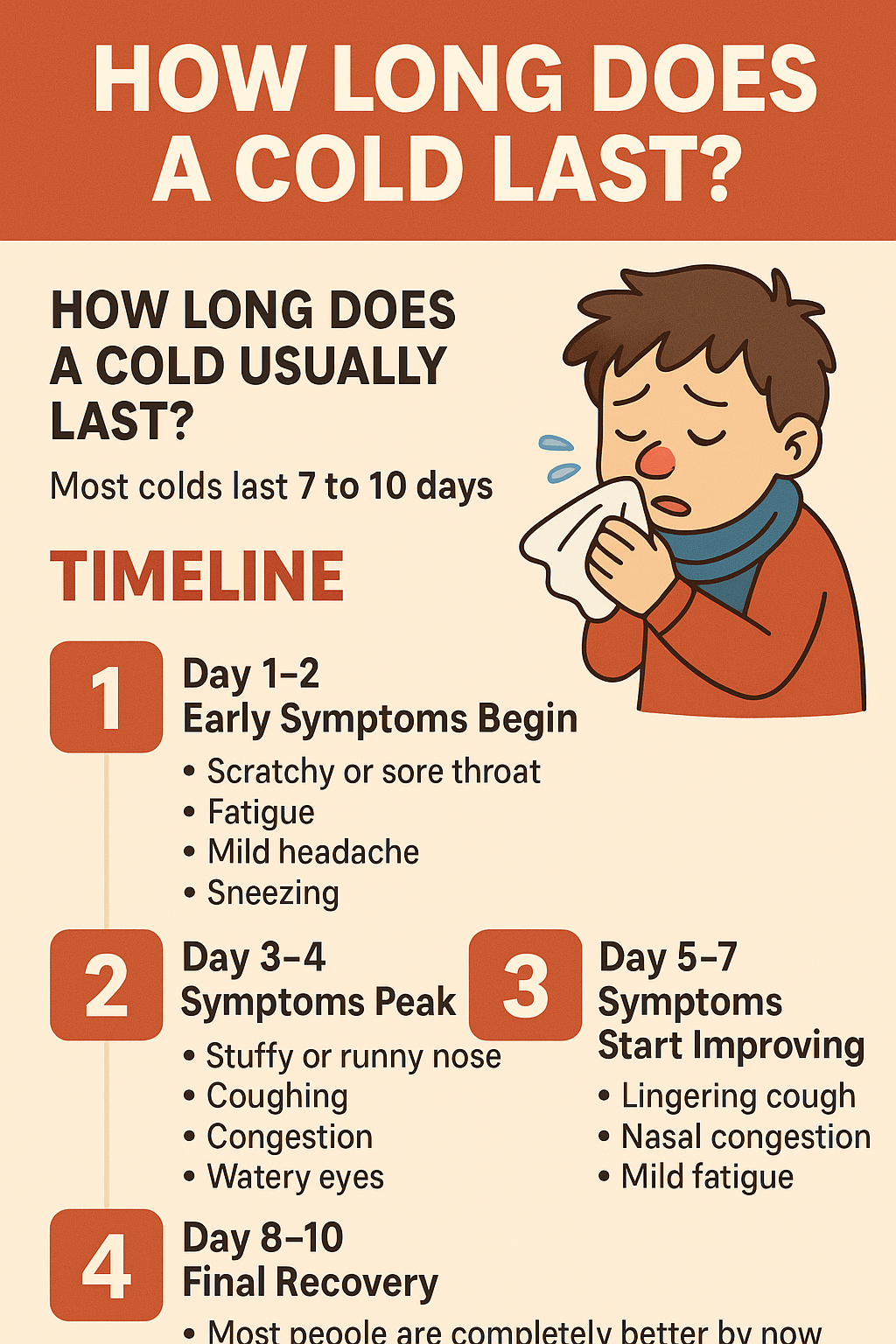
Most colds last 7 to 10 days. However, there is a general timeline:
Day 1–2: Early Symptoms Begin
This is when you may start noticing:
- Scratchy or sore throat
- Fatigue
- Mild headache
- Sneezing
These are the earliest signs that your body is fighting something.
Day 3–4: Symptoms Peak
During this stage, your symptoms are at their worst:
- Stuffy or runny nose
- Coughing
- Congestion
- Watery eyes
This is the stage people usually feel the most frustrated or tired.
Day 5–7: Symptoms Start Improving
Your immune system begins winning the battle.
You may still have:
- A lingering cough
- Nasal congestion
- Mild fatigue
But overall, you’ll feel much better than during peak days.
Day 8–10: Final Recovery
Most people are completely better by now.
Some may have a post-cold cough for another week due to irritated airways.
Why Do Some Colds Last Longer?
While most colds clear up in a week, some can linger for up to 2 weeks. Several factors affect how long your cold lasts:
1. Weak Immune System
If your immune system is tired or weak, it may take longer to fight off the virus.
2. Age
Children tend to have longer-lasting colds because their immune systems are still developing.
3. Stress and Lack of Sleep
Stress reduces immunity, making the cold feel worse and last longer.
4. Smoking
Smokers often experience longer recovery and more severe chest symptoms.
When Is a Cold Most Contagious?
People are most contagious during the first 3 days of symptoms. This is when the virus spreads easily through:
- Sneezing
- Coughing
- Touching surfaces
Even if you feel only a slight sore throat, you may already be spreading the virus.
How to Tell If It’s a Cold or Something Else
Sometimes cold symptoms overlap with other illnesses. Here’s how to differentiate:
Cold vs. Flu
- Cold: Mild symptoms, rarely a fever
- Flu: High fever, body aches, sudden onset of symptoms
Cold vs. Allergies
- Cold: Symptoms last 7–10 days
- Allergies: Can last weeks or months
Cold vs. COVID-19
Cold symptoms are milder. COVID-19 may include:
- Fever
- Loss of taste or smell
- Breathing difficulty
How to Shorten a Cold Naturally
There’s no cure for the common cold, but you can support your body to recover faster.
1. Rest Is Essential
Your immune system works best when your body is well-rested.
2. Stay Hydrated
Drink:
- Water
- Herbal tea
- Warm soups
Hydration helps thin mucus and soothe your throat.
3. Use Warm Steam
A warm shower or steam bowl can relieve nasal congestion instantly.
4. Saltwater Gargle
Excellent for soothing a sore throat and reducing irritation.
5. Vitamin C & Zinc
These may help reduce the severity and duration of colds when taken early.
6. Honey for Cough
One teaspoon of honey can calm nighttime coughing better than some cough syrups.
What Not to Do When You Have a Cold
Certain habits can make your cold last longer:
- Don’t smoke or stay around smoke
- Don’t overwork yourself
- Avoid alcohol, which dehydrates you
- Don’t take antibiotics — they do not work for viral infections
When Should You See a Doctor?
See a doctor if you experience:
- A fever lasting more than 3 days
- Difficulty breathing
- Chest pain
- Symptoms lasting longer than 14 days
- Yellow or green mucus with fever (may indicate infection)
These signs may point to something more serious than a common cold.
Final Thoughts
So, how long does a cold last? For most people, it lasts 7–10 days, with symptoms peaking around day 3 or 4 and gradually improving afterward. While there’s no instant cure, simple home remedies, rest, and hydration can help speed up recovery. Remember, if symptoms last longer than two weeks, it’s best to seek medical advice.
FAQs
1. Can a cold last for 2 weeks?
Yes, some colds may last 10–14 days, especially in children or people with weaker immune systems.
2. How do I know if it’s just a cold?
Colds usually involve a runny nose, mild cough, and sore throat without a high fever.
3. When am I no longer contagious?
Most people stop being contagious after day 5, but mild spread can still happen until symptoms vanish.
4. Should I take antibiotics for a cold?
No, antibiotics only work for bacterial infections, not viruses.
5. What makes a cold worse at night?
Lying down causes mucus drainage and throat irritation, making symptoms feel worse.