
Dogs are more than pets — they are family members. As dog owners, one of the biggest questions we often ask is: How long do dogs live? The answer depends on many factors, including breed, size, genetics, lifestyle, and overall care. While every dog is unique, understanding average lifespans can help you give your dog the healthiest and happiest life possible.
This guide explores how long dogs typically live, which breeds live the longest, what affects lifespan, and how you can help your dog live a longer, healthier life.
Average Lifespan of Dogs
Most dogs live:
➡️ 10 to 13 years on average
However, some dogs live much longer — even up to 16 to 20 years, especially smaller breeds. Large dogs generally have shorter lifespans, while smaller dogs tend to live longer.
Typical Dog Lifespan by Size:
- Small dogs: 12–16 years
- Medium dogs: 10–14 years
- Large dogs: 8–12 years
- Giant breeds: 6–10 years
This difference is mainly due to how quickly larger dogs grow and age.
How Long Do Different Dog Breeds Live?
Every breed is different. Here are some averages for popular breeds:
Long-Living Breeds:
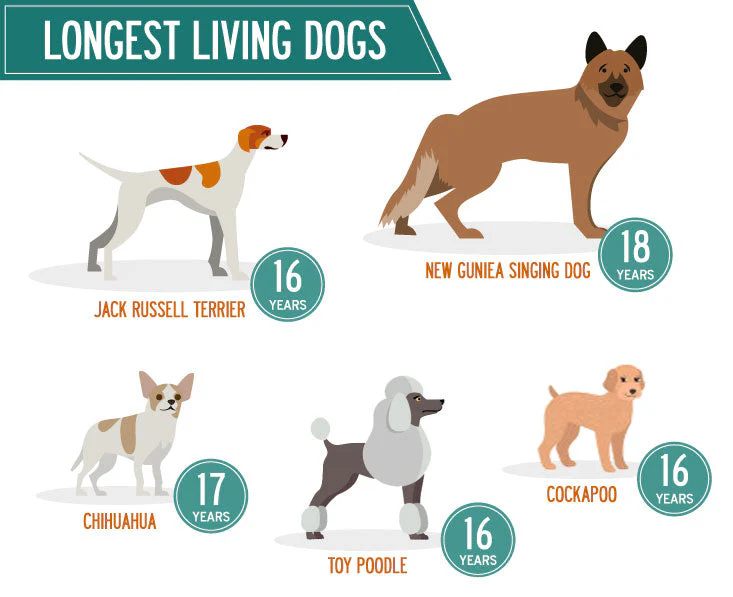
- Chihuahua: 14–18 years
- Dachshund: 12–16 years
- Yorkshire Terrier: 13–17 years
- Pomeranian: 12–16 years
- Toy Poodle: 14–18 years
Medium Lifespan Breeds:
- Labrador Retriever: 10–12 years
- Golden Retriever: 10–12 years
- Beagle: 12–15 years
- Shih Tzu: 12–16 years
- Boxer: 9–12 years
Shorter Lifespan Breeds (Usually Large or Giant):
- German Shepherd: 9–12 years
- Rottweiler: 8–11 years
- Great Dane: 6–10 years
- Bernese Mountain Dog: 6–9 years
- Mastiff: 6–10 years
Small breeds live longer because their bodies age more slowly. Giant breeds age much faster, affecting their longevity.
What Affects How Long a Dog Lives?
Many factors influence a dog’s lifespan. Some are genetic, but many can be controlled with proper care.
1. Breed and Genetics
Some breeds naturally live longer because of healthier genetic lines. Others are prone to:
- Heart issues
- Joint problems
- Respiratory issues
- Cancer
Good breeding practices also affect lifespan.
2. Size
Smaller dogs age slower, leading to longer lifespans. Larger dogs grow rapidly and experience age-related problems earlier.
3. Diet and Nutrition
High-quality food can extend a dog’s life by:
- Maintaining healthy weight
- Preventing chronic disease
- Boosting immune function
Poor nutrition contributes to obesity — one of the top causes of reduced lifespan in dogs.
4. Exercise
Regular physical activity helps:
- Control weight
- Strengthen the heart
- Improve mood
- Reduce stress
Dogs that exercise daily typically live longer.
5. Veterinary Care
Regular vet visits help detect problems early, such as:
- Dental disease
- Heart conditions
- Parasites
- Tumors
- Allergies
Early treatment often adds years to a dog’s life.
6. Lifestyle and Environment
Dogs living in safe, clean environments with mental stimulation live longer. Stress, loneliness, poor living conditions, or constant confinement reduce lifespan.
How Long Do Mixed-Breed Dogs Live?
Mixed-breed dogs often live 12–15 years and sometimes longer. They benefit from something called hybrid vigor, meaning they are less likely to inherit certain genetic diseases common in purebred dogs.
How Long Do Puppies, Adults, and Senior Dogs Live?
Dogs go through life stages just like humans.
Puppy Stage: Birth to 1 year
Fast growth and development.
Adult Stage: 1 to 6 years (small breeds) or 1 to 4 years (large breeds)
Prime health and activity.
Senior Stage:
- Small dogs: 10+ years
- Medium dogs: 8+ years
- Large dogs: 6+ years
As dogs age, they slow down and require more monitoring.
How to Help Your Dog Live Longer
You can’t control genetics, but you can control daily care. Here’s how to add years to your dog’s life:
1. Feed High-Quality Food
Choose foods rich in protein, healthy fats, and vitamins. Avoid foods high in fillers or artificial ingredients.
2. Maintain a Healthy Weight
Overweight dogs have shorter lifespans and higher risks of:
- Diabetes
- Heart disease
- Joint problems
Weight control alone can add 2–3 years to a dog’s life.
3. Regular Exercise
Daily walks, playtime, and mental stimulation keep dogs both physically and emotionally healthy.
4. Routine Vet Checkups
Annual or semi-annual checkups can catch diseases early.
5. Dental Care
Dental disease affects nearly 80% of dogs by age 3. Regular brushing and dental cleanings help prevent infections.
6. Keep Vaccinations Up to Date
Vaccines protect dogs from deadly diseases like rabies and parvo.
7. Provide Love and Attention
Dogs thrive emotionally when they feel safe, loved, and social. Stress-free environments prolong life.
What Is the Oldest Dog Ever Recorded?
The world’s oldest dog, according to official records, was Bobi, a Portuguese dog who lived to 31 years old. Many other dogs have lived between 20 and 25 years, especially smaller breeds.
When Is a Dog Considered Old?
Generally:
- Small dogs: Senior at 10
- Medium dogs: Senior at 8
- Large dogs: Senior at 6
- Giant dogs: Senior at 5
As dogs enter their senior years, they need more health monitoring and gentler exercise.
Final Thoughts
So, how long do dogs live?
Most dogs live 10–13 years, but many factors such as breed, size, genetics, diet, lifestyle, and veterinary care play a major role. Some dogs, especially small breeds, can live well into their teens and even past 20 years with excellent care.
The best way to extend your dog’s lifespan is to provide proper nutrition, daily exercise, regular vet visits, mental stimulation, and lots of love.