
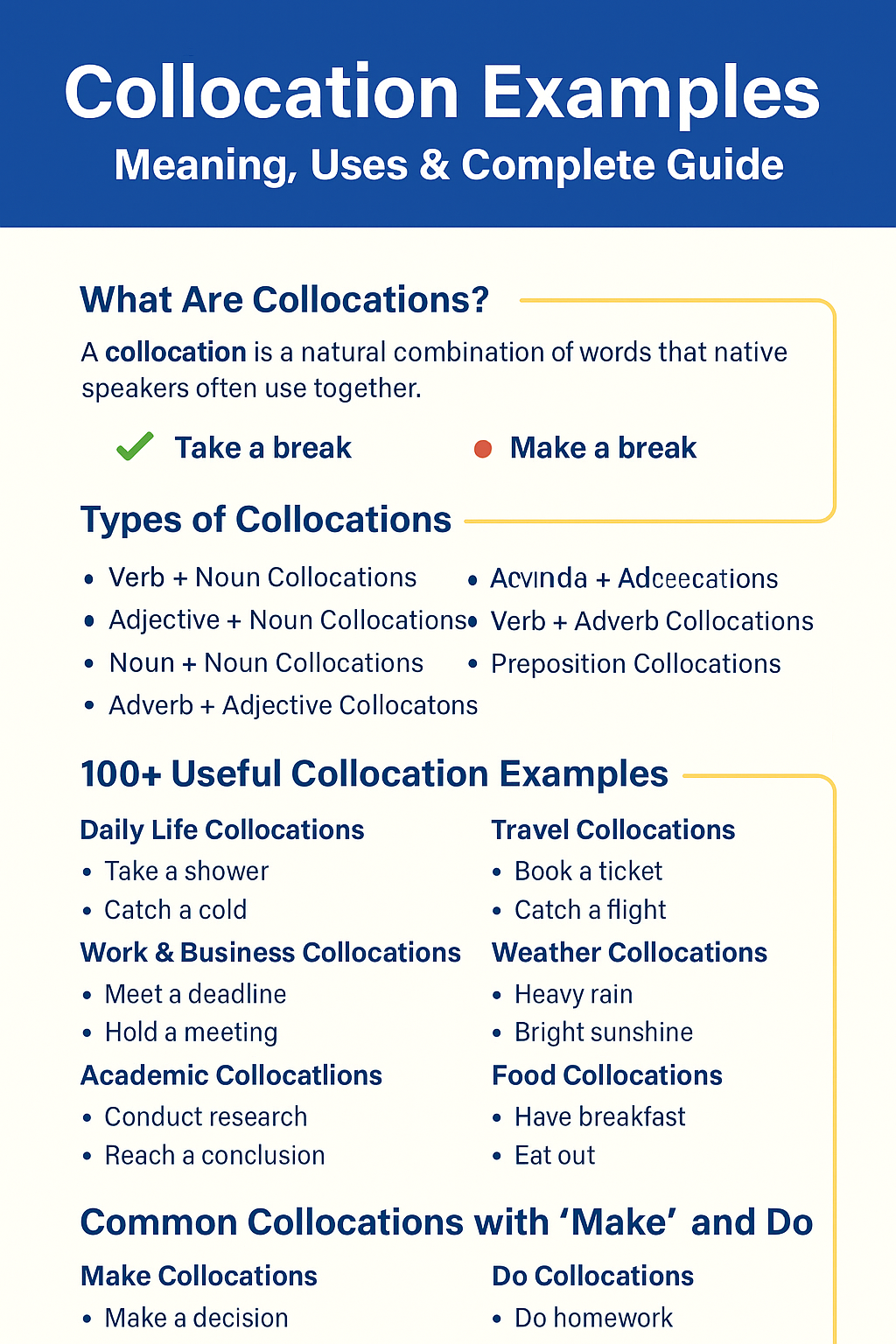

Collocations are one of the most powerful tools for sounding natural, fluent, and confident in English. If you’ve ever wondered why English speakers say “make a decision” but not “do a decision,” or why we say “strong coffee” but not “powerful coffee,” the answer is simple: collocations.
In this complete guide, you’ll learn what collocations are, why they matter, the most useful types of collocations, and 100+ collocation examples you can start using today.
What Are Collocations?
Simple Definition
A collocation is a natural combination of words that native speakers often use together.
They “sound right” because they frequently appear in everyday English.
Example:
- Take a break (✔️ natural)
- Make a break (❌ unnatural)
Why Collocations Matter in English
Collocations help you:
- sound more like a native speaker
- improve fluency and accuracy
- express thoughts more clearly
- avoid awkward or unnatural sentences
Mastering them is one of the fastest ways to improve your English.
Types of Collocations
Below are the main types you will see in English.
1. Verb + Noun Collocations
Examples:
- Make a mistake
- Give advice
- Take action
- Pay attention
- Have lunch
2. Adjective + Noun Collocations
Examples:
- Strong coffee
- Heavy rain
- Rich history
- Major issue
- Close friend
3. Noun + Noun Collocations
Examples:
- School bus
- Business plan
- Career path
- Customer service
- Traffic jam
4. Adverb + Adjective Collocations
Examples:
- Highly effective
- Deeply disappointed
- Strongly recommended
- Fully aware
- Badly damaged
5. Verb + Adverb Collocations
Examples:
- Speak clearly
- Apologize sincerely
- Work hard
- Grow quickly
- Move slowly
6. Preposition Collocations
Examples:
- Interested in
- Famous for
- Responsible for
- Afraid of
- Similar to
100+ Useful Collocation Examples
Daily Life Collocations
- Take a shower
- Catch a cold
- Make the bed
- Save time
- Lose weight
- Break a promise
- Keep in touch
- Set an alarm
Work & Business Collocations
- Meet a deadline
- Hold a meeting
- Make an appointment
- Take responsibility
- Earn respect
- Launch a product
- Run a business
- Close a deal
Academic Collocations
- Conduct research
- Reach a conclusion
- Give a presentation
- Take notes
- Make progress
- Solve a problem
- Pass an exam
- Study hard
Travel Collocations
- Book a ticket
- Catch a flight
- Make a reservation
- Miss the train
- Pack your bags
- Travel abroad
- Rent a car
- Go sightseeing
Weather Collocations
- Heavy rain
- Bright sunshine
- Strong winds
- Clear skies
- Thick fog
Food Collocations
- Have breakfast
- Eat out
- Grab a bite
- Make a sandwich
- Boil water
- Fresh ingredients
- Delicious meal
Collocations with “Make” and “Do”
These two verbs confuse many learners.
Make Collocations
- Make a decision
- Make a mistake
- Make an effort
- Make money
- Make noise
- Make a plan
Do Collocations
- Do homework
- Do business
- Do your best
- Do the dishes
- Do research
- Do a favor
Collocations in Everyday Conversations
Spoken English Examples
- Can you make a call for me?
- I need to take a break.
- Let’s grab lunch together.
- Don’t lose hope.
Professional Conversation Examples
- We must meet the deadline.
- Please submit the report today.
- The company will launch a new product.
- Let’s discuss the proposal.
Strong vs. Weak Collocations
Strong Collocations
These words only go together in one natural way.
Examples:
- Fast asleep
- Deep regret
- Bitterly cold
Weak Collocations
These words can combine with many others.
Examples:
- Big house
- Large group
- Nice day
Mistakes Learners Make with Collocations
1. Mixing Similar Words
❌ powerful tea
✔️ strong tea
2. Translating Directly from Native Language
Collocations are rarely the same across languages — so avoid literal translations.
How to Learn and Remember Collocations
1. Use Them in Sentences
Practice writing 3–5 sentences daily.
2. Read and Listen to Native Content
Movies, articles, podcasts — they all help.
3. Practice with Flashcards
Repetition helps the brain remember combinations.
Conclusion
Collocations are the secret to speaking natural, fluent English. By learning and practicing the most common ones, you can express yourself more clearly, understand native speakers better, and sound more confident. Whether you’re preparing for exams, improving conversational skills, or writing professionally, collocations will always strengthen your communication.
FAQs
1. What is a collocation in simple words?
A collocation is a group of words that naturally go together in English, like “take a break.”
2. Why are collocations important?
They make your English sound more natural and fluent.
3. How can I memorize collocations faster?
Use flashcards, write sentences daily, and practice through reading and listening.
4. Are collocations used in speaking or writing?
Both! They are essential in daily conversation and formal writing.
5. Can collocations improve my grammar?
Yes. Using the right word combinations helps you form correct, natural sentences.