
If you spend any time on YouTube, TikTok, or Instagram, you’ve probably come across videos titled “ASMR for sleep,” “ASMR triggers,” or “ASMR tapping.” But what does ASMR actually mean, and why has it become one of the most popular online trends? Whether you’re curious about the science behind it or wondering why millions of people enjoy it daily, this detailed guide explains the full ASMR meaning, how it works, and why people love it.
What Does ASMR Mean?
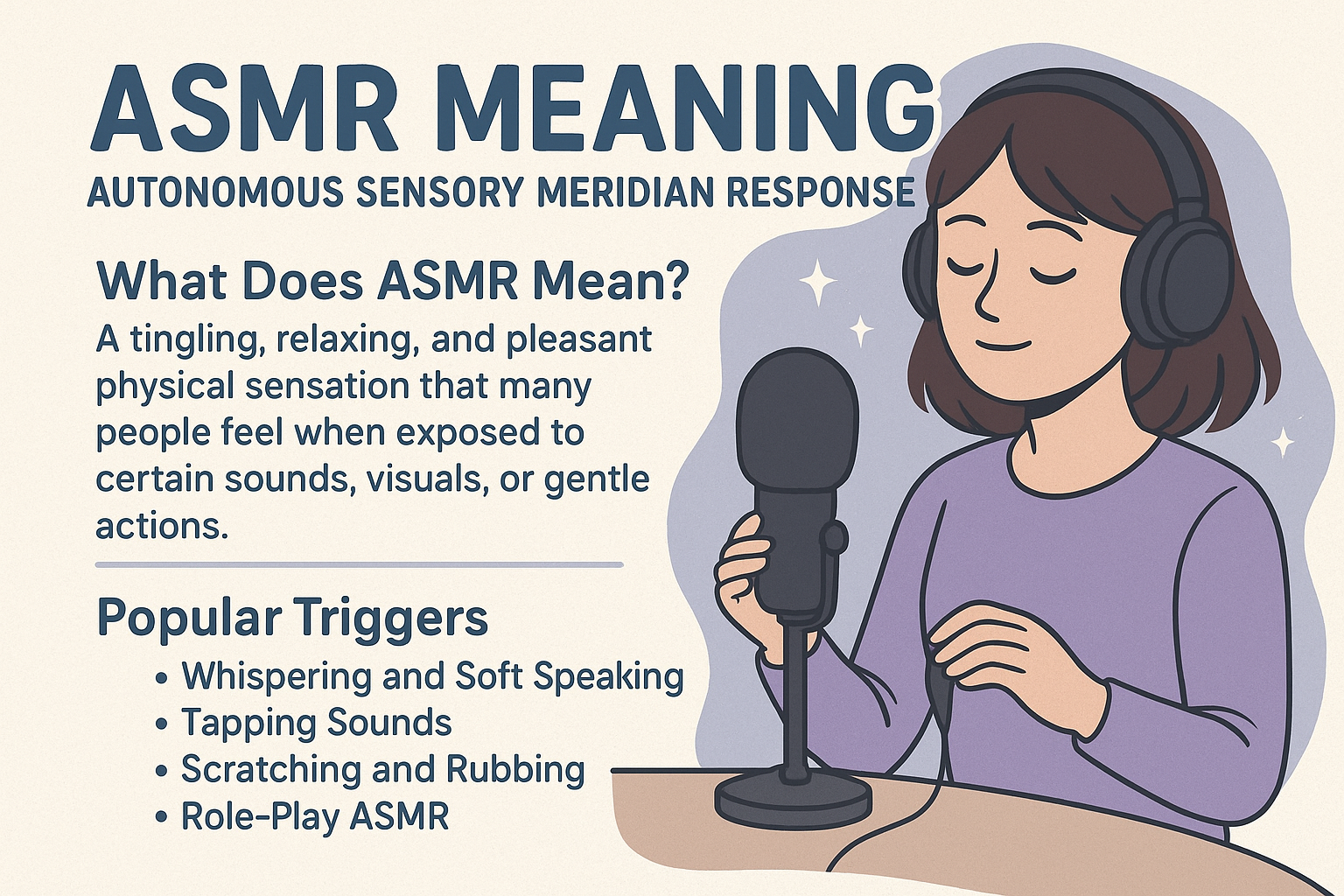
ASMR stands for Autonomous Sensory Meridian Response.
It refers to a tingling, relaxing, and pleasant physical sensation that many people feel when exposed to certain sounds, visuals, or gentle actions.
These tingles usually start at the scalp and move down the neck and spine, creating a calming and comforting effect. People often describe ASMR as:
- A warm wave of relaxation
- A tingling “brain massage”
- A soothing sensory experience
- A trigger for sleep or stress relief
While not everyone experiences ASMR, those who do often find it incredibly relaxing and helpful for sleep, focus, or anxiety reduction.
Where Did the Word ASMR Come From?
The term ASMR was first introduced in 2010 by Jennifer Allen, who created the phrase to describe this mysterious sensory feeling that had no official name. Before 2010, people online referred to these sensations as:
- “Brain tingles”
- “Head orgasms” (misleading and not sexual)
- “Tingle head rush”
- “Attention Induced Euphoria”
Giving it the scientific-sounding name “Autonomous Sensory Meridian Response” helped make the phenomenon widely accepted and easier to study.
How Does ASMR Work?
Researchers are still studying the exact science behind ASMR, but most theories suggest it is related to:
1. Brain Relaxation Signals
ASMR triggers may activate parts of the brain responsible for:
- Relaxation
- Emotional comfort
- Calmness
- Sleep readiness
This is why many people use ASMR at night.
2. Positive Emotional Connections
Many ASMR triggers involve soft voices, careful attention, and gentle movements, which mimic comforting behaviors from childhood, such as:
- Someone speaking softly
- A teacher explaining something slowly
- A parent brushing your hair
These familiar actions may activate the brain’s “comfort response.”
3. Release of Feel-Good Chemicals
Studies suggest ASMR may increase:
- Dopamine (feel-good hormone)
- Oxytocin (trust and bonding hormone)
- Serotonin (mood stabilizer)
This combination leads to deep relaxation and calmness.
Popular Triggers That Create ASMR Sensations
Not all ASMR content works for everyone. Some triggers may relax one person but annoy another. However, here are the most common ASMR triggers:
1. Whispering and Soft Speaking
Whispered voices are the most popular ASMR trigger.
They create an intimate, calming sound that many people find soothing.
2. Tapping Sounds
Gently tapping on wood, plastic, books, or glass produces rhythmic sounds that stimulate tingles.
3. Scratching and Rubbing
Microphone brushing, scratching fabric, or rubbing textured objects can create warm, relaxing sensations.
4. Role-Play ASMR
Role-play videos simulate real-life situations such as:
- Personal attention
- Doctor check-ups
- Spa treatments
- Haircuts
- Makeup sessions
These videos simulate calm, close-up interactions that trigger comfort responses.
5. Eating Sounds (Mukbang ASMR)
Some people enjoy:
- Crunching
- Chewing
- Slurping
- Sipping
Others dislike it — this trigger is very personal.
6. Visual Triggers
Slow, repetitive, and gentle visuals like:
- Hand movements
- Object sorting
- Painting
- Organizing items
- Slow-motion gestures
These visuals help quiet the mind and promote focus.
Why Do People Watch ASMR?
ASMR content is hugely popular because it offers real benefits, including:
1. Better Sleep
Millions use ASMR videos to fall asleep quickly.
The slow, gentle sounds help reduce mental noise and prepare the brain for rest.
2. Stress and Anxiety Relief
ASMR can calm the nervous system, which is extremely helpful for people dealing with:
- Daily stress
- Anxiety
- Overthinking
- Panic episodes
The soothing triggers create a peaceful mental space.
3. Improved Focus
Some use ASMR as background noise while working or studying.
Soft, repetitive sounds help maintain concentration without distraction.
4. Emotional Comfort
Role-play videos simulate real human warmth and attention, offering a sense of connection and safety — even through a screen.
5. Entertainment
For many, ASMR is simply fun, satisfying, and enjoyable to watch.
Is ASMR Safe?
Yes, ASMR is considered completely safe.
However, a few points are worth noting:
- Not everyone feels ASMR sensations.
- Some triggers may be uncomfortable for certain people (like chewing sounds).
- ASMR should not replace medical treatments for anxiety or insomnia.
Overall, it is a harmless and natural form of relaxation.
Why Is ASMR So Popular Online?
ASMR exploded in popularity because:
- YouTube and TikTok creators started experimenting with unique sounds.
- People discovered it helps with sleep and stress during modern busy lifestyles.
- ASMR microphones and high-quality recording equipment improved dramatically.
- Audiences wanted comforting and peaceful content online.
- The pandemic increased demand for mental wellness and relaxation.
Today, ASMR is one of the biggest niches on YouTube, with creators earning millions of views daily.
Final Thoughts: ASMR Meaning and Why It Matters
The meaning of ASMR — Autonomous Sensory Meridian Response — refers to relaxing tingles triggered by certain sounds or visuals. Whether it’s whispering, tapping, gentle hand movements, or soothing role-play videos, ASMR has become a global tool for sleep, stress relief, and emotional comfort.
Even though science is still trying to fully understand how ASMR works, millions of people experience its calming effects every day. If you struggle with sleep, stress, or just want to relax after a long day, trying ASMR may be exactly what your mind and body need.